Take-Home Reading in the Early Years: What Really Matters
A helpful parent guide to take-home reading
At The Child Centred Learning Tree, we often hear from families who feel unsure about how to best support their child with take-home reading.
- Should you correct every word?
- What if your child guesses?
- Are you doing it “right”?
- What if your child isn’t interested in reading school take-home books?
The good news is this: effective early reading support at home doesn’t require perfection, just the right approach.
Reading Is More Than Just Saying Words
In the early years, learning to read is not simply about getting through a book. It involves developing a set of foundational skills, including:
- Phonological awareness, hearing and working with sounds in words
- Decoding, linking letters to sounds
- Language comprehension, understanding meaning
- Confidence and motivation
Research consistently shows that children learn best when these skills are developed together in a supportive and engaging environment.
Start with Connection, Not Correction
One of the most powerful, and often overlooked, strategies is simple:
Make reading time feel safe and positive
When children feel relaxed and connected, they are far more open to learning.
Helpful Reminder
Reading should feel like a connection, not a test.
Focus on positive experiences over perfect performance.
Try:
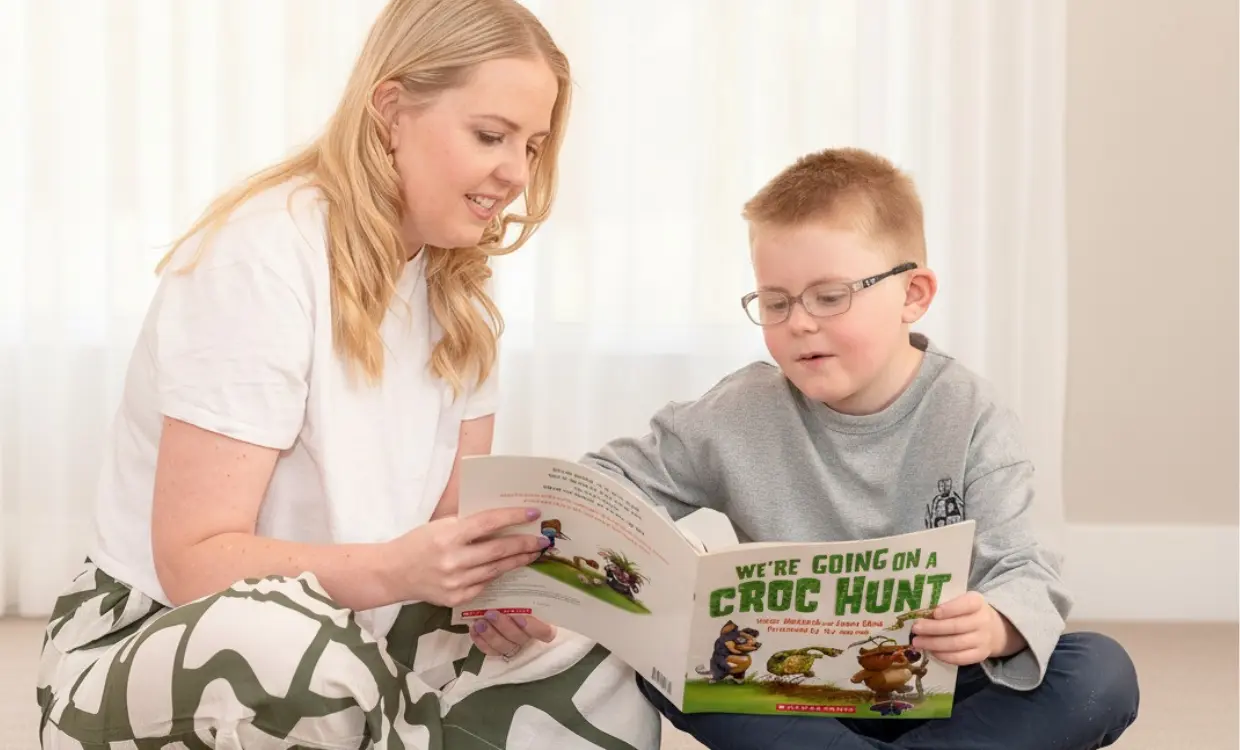
- Sitting close together
- Keeping your tone warm and encouraging
- Letting your child enjoy the story without pressure or rushing, even when life feels busy
If reading becomes stressful, children may begin to avoid it, no matter how capable they are.
Support Sound Awareness
Build phonological skills through simple moments
Before children become fluent readers, they need to hear and play with sounds.
You can support this during reading by:
- Noticing rhymes, such as “cat” and “hat”
- Breaking words into sounds, such as “s-u-n”
- Encouraging your child to listen for the first sound in a word
These small moments build the foundation for strong decoding skills.
Pick a word from your book and see how many rhyming words you can think of together
Help with Decoding Gently
Guide your child without creating pressure
When your child comes to an unfamiliar word, it’s okay to guide them.
Evidence-based strategies include:
- Encouraging them to look at the letters and sounds, not just guess from pictures
- Prompting with, “What sound does that letter make?”
- Blending sounds together slowly
If a word is too difficult, you can simply tell them and move on. This keeps reading flowing and enjoyable.
Talk About the Story:
Reading is about understanding, not just accuracy
Reading is not just about saying the words correctly. It is also about understanding meaning.
Pause and engage your child by:
- Talking about the pictures
- Asking simple questions, such as “What do you think will happen next?”
- Connecting the story to their own experiences
This builds vocabulary, comprehension and a love of storytelling.
Focus on Effort, Not Perfection
Encouragement builds confidence
Children thrive when their efforts are recognised.
Instead of correcting every mistake, try saying:
- “I love how you tried that word.”
- “You noticed the first sound. Great thinking.”
Confidence is a key driver of progress in early reading.
Keep It Short, Consistent and Positive
Any form of reading counts
You don’t need long sessions to make an impact.
Even if it’s not the take-home reader, reading still matters. Library books, audio books, or you reading to your child all support language, connection and confidence.
Consistency builds routine, while short sessions help prevent overwhelm.
A Child-Centred Approach to Reading
Every child develops at their own pace. Take-home reading should never feel like a test. It should feel like an opportunity to:
- Connect
- Build confidence
- Support skill development in a gentle, responsive way
When we focus on the whole child, reading becomes something they want to do, not something they fear.
Supporting Your Child’s Reading Journey
You don’t have to navigate early reading alone. The Child Centred Learning Tree provides child-centred support to help children build skills, confidence and a positive relationship with learning.

Belinda is passionate about supporting children and families through evidence-based, child-centred approaches to learning and development. She works alongside families to build confidence, strengthen foundational skills and create positive learning experiences that support each child’s unique journey.
Belinda
Early Childhood Educator & Key Worker